The Anchor at Seventy-Seven Meters, one of freediving’s greatest stories.

An Imagined Conversation with Stathis Hatzis
Stathis Georgios Hatzis died in 1936, so this conversation never happened. It is based on surviving accounts of his dives, observations attributed to Giuseppe Musengo, the chief medical officer aboard the Italian battleship Regina Margherita, and historical descriptions of Greek sponge diving.
The answers are fictional and should not be read as direct quotations from Hatzis. Where historical sources disagree, I have avoided presenting uncertain details as established facts.

Pigadia Bay, Karpathos. July 1913.
The first thing I notice is the battleship.
The Regina Margherita dominates the bay, a steel wall rising from the water. At almost 140 meters long, carrying enormous guns and hundreds of sailors, she represents everything modern technology can produce.
Yet the ship is going nowhere.

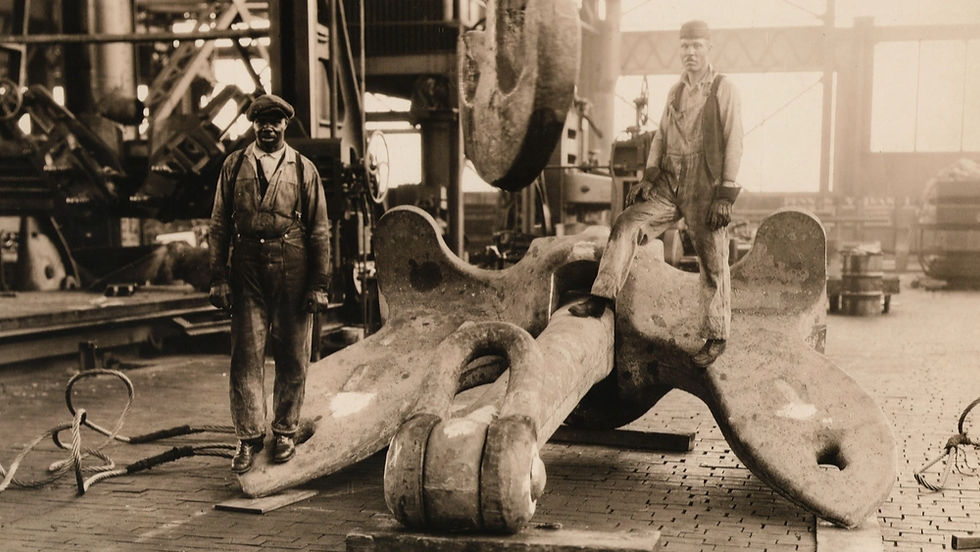
Not because its engines have failed, but because one of its enormous anchors, together with part of its chain, has disappeared into the depths. A warship of this size cannot casually abandon such an essential piece of equipment. Without it, her ability to anchor safely is compromised, and continuing military operations would become more dangerous. The anchor is also far too valuable, both financially and strategically, to leave on the seabed.
The crew knows approximately where it lies: more than seventy meters below them. They have the ship, the machinery and hundreds of sailors, but none of their divers can work at such a depth.
Until someone reaches the anchor and attaches a recovery line, the Regina Margherita will remain in Pigadia Bay.
Their solution is standing beside me.
He does not look like a modern athlete.
Stathis Hatzis is lean, weathered, and approximately thirty-five years old. His body carries the marks of a life spent diving for sponges. One eardrum is reportedly destroyed; little remains of the other. The ship’s doctors have also noted signs of pulmonary emphysema.
During his examination, he reportedly managed to hold his breath on land for only around forty seconds.
Nevertheless, he has told the Italians that he can find their anchor.
Beside him lies his diving equipment.
A stone.

A Name Wearing a Different Uniform
Anthony: Before we begin, what should I call you?
Stathis: Stathis.
Anthony: Not Haggi Statti?
He laughs.
Stathis: That is what the Italians wrote. When a foreign officer writes a Greek name, sometimes the name comes back wearing a different uniform.
Anthony: You realize freedivers will still be discussing you more than a century from now?
Stathis: Freedivers?
Anthony: People who dive while holding their breath.
Stathis: We call that work.
Forty Seconds on Land
Anthony: The doctors examined you before allowing you to dive. They were not impressed.
Stathis: Doctors are rarely impressed by sponge fishermen.
Anthony: They described you as thin and found signs of emphysema. Your resting pulse was reportedly between eighty and ninety beats per minute, and you were breathing twenty to twenty-two times per minute. Your ears were badly damaged. Then you held your breath for only about forty seconds.
Stathis: That part amused them.
Anthony: Why?
Stathis: They asked me to sit in a room and stop breathing. I told them that I was not a room diver.
Anthony: Yet you claimed you could remain underwater for several minutes.
Stathis: Because I work underwater. I know the stone, the rope, the pressure and the sea. Sitting on a chair while men stare at me is a different exercise.
Modern freedivers would understand his objection. A breath-hold is not determined by lung volume alone. Mental state, immersion, pressure, temperature, familiarity and the body’s diving response all influence what happens.
But a difference between forty seconds on land and several minutes underwater remains extraordinary.
Anthony: You also told them that you could dive to one hundred meters.
Stathis: I told them what I had done while looking for sponges.
Anthony: Did anyone measure those dives?
Stathis: We did not carry judges.
Anthony: So you understand why people might doubt you?
Stathis: Yes. But the sea does not change its depth because somebody on land refuses to believe you.
The Battleship and the Lost Anchor
Anthony: Tell me what happened to the anchor.
Stathis: The ship tried to anchor, but something went wrong with the chain. The anchor and part of the chain disappeared.
Anthony: And the Italians could not send a diver?
Stathis: Not to that depth. They asked for sponge divers.
The Regina Margherita was not a small vessel that had misplaced an ordinary anchor. She was one of Italy’s major pre-dreadnought battleships, a massive warship with a crew of hundreds. The anchor alone may have weighed several tonnes, not including the heavy chain that had disappeared with it. Recovering it required more than simply locating it. Someone had to reach the seabed, work beside the anchor and attach a line or cable strong enough for the ship’s machinery to haul it back to the surface.
Anthony: How deep did they think it was?
Stathis: Deep enough that nobody wanted to go.
Anthony: Approximately seventy-seven meters?
He shrugs.
Stathis: You like exact numbers. A sponge diver likes finding the bottom.
Five Pounds and a Questionable Request
Anthony: What did you ask for in return?
Stathis: A little money.
Anthony: Some accounts say five pounds sterling.
Stathis: That would not have made me a rich man.
Anthony: You also asked for permission to fish with dynamite.
For the first time, he looks slightly uncomfortable.
Stathis: You do not approve?
Anthony: No.
Stathis: You come from the future. Perhaps the future can afford to disapprove of the past.
It is a fair answer.
Explosives were once used in Mediterranean fishing, despite their destructive effects. Hatzis reportedly requested either explosives, official permission to use them, or help dealing with the local authorities. The precise terms vary between accounts.
Anthony: You could have asked for a much larger reward.
Stathis: I had not recovered anything yet.
Anthony: And if you succeeded?
Stathis: Then perhaps they would believe me the next time.
The Stone That Carried Him Down
Anthony: How did your diving stone work?
He points towards the slab beside us.
A rope is attached to the stone. It is heavy enough to accelerate his descent but shaped so that an experienced diver can influence its direction. This traditional system is commonly associated with the skandalopetra, although the Symian term kampanelopetra also appears in accounts of Hatzis.
Stathis: I hold the stone, and it carries me down. My companion controls the rope from the boat. When I release it or signal, he helps bring me back.
Anthony: So you do not swim all the way down and all the way up?
Stathis: Why waste strength fighting the water?
Anthony: To a modern freediver, the system resembles variable weight on the descent and assisted free immersion on the ascent.
He stares at me.
Stathis: You have invented many words for holding a stone.
Anthony: The words allow us to compare performances.
Stathis: The sponge allows us to eat.
That one belongs in the interview.

Breathing Before the Dive
Anthony: How do you prepare before a dive?
Stathis: I breathe.
Anthony: Slowly?
Stathis: Sometimes.
Anthony: Do you hyperventilate?
Stathis: I breathe until I feel ready.
This is one point where romanticizing the old sponge divers becomes dangerous. Historical observers reported that some divers ventilated strongly before descending. They had no pulse oximeters, no lanyards, no counterballast systems, and no trained deep safety divers waiting for them. Their methods developed through experience, but not every traditional practice was safe.
Anthony: Today, we know that excessive breathing before an apnea can reduce the warning created by carbon dioxide without adding much oxygen. It can make a diver feel comfortable while bringing him closer to a blackout.
Stathis: I do not know what carbon dioxide is.
Anthony: Then let me explain it differently. Before I descend, I breathe slowly. If I breathe too deeply and too quickly, I can silence the warning that tells me when I need to surface. I can feel calm even as my body is already running out of time.
Stathis: So the danger is not only that the sea takes my breath. It is that I may no longer feel the need to seek it.
Anthony: Exactly.
Stathis: Anthony, you think too much. Sponge divers learn by surviving the mistakes of those who came before us. If I have made it this far, I would say the way I breathe before diving is not so bad.
Anthony: Fair enough.
Stathis: But perhaps your century has learned something useful after all.
Anthony: We have. Although we still make mistakes.
Stathis: Then perhaps you have not learned it well enough.

Fear Was Part of the Job
Anthony: Were you afraid?
Stathis: Of course.
I had expected denial.
Anthony: People will imagine that a man who repeatedly dives beyond seventy meters must feel no fear.
Stathis: Only a foolish diver feels nothing. Fear makes you inspect the rope. Fear makes you watch the current. Fear reminds you that the surface is far away.
Anthony: What were you most afraid of?
Stathis: Not finding the anchor.
Anthony: Not dying?
Stathis: If every fisherman stayed home because he might die, every fishing boat would remain tied to the harbor.
His answer reflects a world far removed from modern recreational freediving. Sponge diving was an occupation, not an organized sport. Divers descended because their families and island economies depended on what they brought back.
Risk was not a personal challenge chosen for self-discovery. It was part of earning a living.
The Weight of the Sea
Anthony: Describe the descent.
Stathis: At first there is light and noise. Then the stone begins to pull strongly. The water becomes colder. The color disappears.
Anthony: What happens to your ears?
Stathis: Very little anymore.
Because his eardrums were severely damaged, Hatzis may not have experienced middle-ear pressure in the same way as a diver with intact membranes. That did not make him immune to pressure, nor does damaging an eardrum provide a viable solution to equalization. It simply means that the surviving descriptions of his ears are relevant to understanding how he reached such depths.
Anthony: And your chest?
Stathis: At depth, I feel the weight of the sea beneath my shoulders. My chest becomes smaller. My throat closes.
Anthony: Does the urge to breathe become stronger?
Stathis: Not always. Deep down, I don't think about breathing the same way.
The pressure at seventy-seven meters is approximately 8.7 times that at the surface. His lungs would have been compressed to a fraction of their surface volume. The doctors observing him did not yet understand the human blood shift, peripheral vasoconstriction, or the full diving response. Some reportedly considered explanations that now sound bizarre, including the possibility that he absorbed meaningful amounts of oxygen through his skin.
Hatzis did not know about the mammalian dive reflex.
He only knew what the sea felt like.
Searching in the Darkness
Anthony: How could you see the bottom?
Stathis: I waited for my eyes.
Anthony: For them to adjust?
Stathis: Yes. At first there is only darkness. Then the bottom begins to appear.
Anthony: Were you wearing goggles?
He laughs again.
Stathis: No.
Traditional naked sponge divers generally descended without the masks we use today. Water contacted the eyes directly, resulting in blurred vision, but experienced divers could still identify large shapes and search an area at close range.
Anthony: What did you see during the first dives?
Stathis: Sand. Rocks. Pieces of darkness that looked like an anchor until I reached them.
Anthony: How large was the search area?
Stathis: Too large.
Sixteen Dives, Twenty-One Dives, or Simply Too Many
Anthony: How many dives did it take?
Stathis: Many.
Anthony: Some accounts say you made at least sixteen dives over three days. Others say twenty-one dives over four days.
Stathis: Did the men counting remain awake for all of them?
Anthony: That is exactly the kind of answer someone gives when historians cannot agree.
Stathis: Then tell them that I dived until I found it.
The surviving retellings are inconsistent. What seems clear is that this was not one miraculous plunge. Hatzis conducted a series of search dives, many between approximately fifty and eighty meters. Some accounts record a maximum search depth of eighty-four to eighty-eight meters.
That may be the most impressive part of the story.
A single extreme descent is one thing. Repeated deep dives over several days, followed by work on the seabed, represent an enormous physical demand. The story is not simply that Hatzis touched a great depth.
He had a difficult job to complete there.
Finding the Anchor
Anthony: When did you finally see the anchor?
Stathis: At first, I saw the chain.
Anthony: What did you feel?
Stathis: Relief.
Anthony: Not triumph?
Stathis: The work was not finished.
He had found an enormous metal object lying somewhere around seventy-seven meters below the battleship. Now he had to attach the recovery line.
Anthony: Did you manage it on the first attempt?
Stathis: No. Finding something and tying something are two different dives.
At depth, every second mattered. Hatzis was cold, under extreme pressure and working with blurred underwater vision. He needed to manipulate a line around part of the chain or through the anchor’s ring, then signal his companion and begin the long ascent.
Anthony: How long were you underwater?
Stathis: About three minutes. Sometimes longer.
Anthony: Modern accounts often give a final dive time between three and three and a half minutes.
Stathis: You see? Your numbers aren't very exact.
The Long Way Back
Anthony: What did the ascent feel like?
Stathis: Slow.
Anthony: Even with someone helping from the surface?
Stathis: The surface is always slow when you need it.
This part of the dive would have carried the greatest hypoxic risk. During the ascent, the surrounding pressure decreased, the air in his lungs expanded, and the partial pressure of oxygen fell rapidly. Hatzis could have felt capable at depth and still lost consciousness during the final meters.
No safety divers were waiting to meet him.
No one was watching his eyes through a mask.
No one could rescue him from thirty meters if he stopped moving.
His connection to the surface was the rope and the man holding it.
Anthony: Did you ever lose consciousness?
Stathis: Not during those dives.
Anthony: Did you know that a diver could return almost to the surface and suddenly become unconscious?
Stathis: We knew that men sometimes did not return.
Empirical knowledge is not the same as physiological understanding, but it is still knowledge.
The sponge divers learned from the people who survived, and perhaps even more from those who did not.
A Fisherman, a Stone and a Battleship
Anthony: What happened when you surfaced after attaching the line?
Stathis: I breathed.
Anthony: Did the sailors cheer?
Stathis: Eventually.
Anthony: Eventually?
Stathis: First, they wanted to know whether the line was secure.
Anthony: And was it?
Stathis: The anchor came back, did it not?
With the line attached, the crew could use the ship’s machinery to recover the anchor. The enormous battleship had finally been rescued by a fisherman carrying a stone.
The contrast is almost too perfect.
Steel, steam engines and naval artillery had failed to solve the problem. A man from Symi, using a method refined over generations of sponge diving, succeeded.
The Doctor Who Could Not Believe It
Anthony: The doctor wrote that you climbed aboard under your own power after your dives.
Stathis: I had climbed into boats all my life.
Anthony: He apparently found it remarkable that you did not appear exhausted.
Stathis: Doctors are easily impressed once they have finished being skeptical.
Anthony: Your face was not blue? Were you not confused?
Stathis: I was cold. I shook the water from my ears and climbed aboard.
Anthony: Today, every one of those dives would require a trained safety team.
Stathis: Then use one.
Anthony: You do not think modern equipment makes the achievement less pure?
Stathis: If equipment helps a diver return alive, only a fool refuses it to make a story more beautiful.
The Record He Never Tried to Set
Anthony: Many people now call this the first great record in freediving.
Stathis: I was not setting a record.
Anthony: You reportedly reached depths that competitive freedivers would not officially approach again for decades.
Stathis: Did I defeat someone?
Anthony: No.
Stathis: Did another man lose because I found the anchor?
Anthony: No.
Stathis: Then it was work, not a record.
That distinction matters.
Modern freediving history often begins with numbers: thirty meters, fifty meters, one hundred meters. Hatzis reminds us that humans were diving deeply before anyone built a sporting structure around the activity.
The depth was not the objective.
It was the distance separating a worker from what he needed to recover.
The Sea Does Not Know Your Personal Best
Anthony: What do you think freedivers of my time misunderstand?
Stathis: You think the sea knows your personal best.
Anthony: That is a little painful.
Stathis: It should be.
Anthony: What else?
Stathis: You train to become comfortable, but comfort is not always safety. You collect numbers because you can show them to other people. The sea does not care about numbers. It cares whether you prepared the rope, whether you understood the current, and whether the person above you was paying attention.
Anthony: That sounds surprisingly modern.
Stathis: No. Perhaps your modern ideas are older than you think.
What We Should Learn from Stathis Hatzis
Anthony: And what should we learn from you?
Stathis: Not to copy me.
I was not expecting that either.
Stathis: You should not dive with damaged ears because mine were damaged. You should not fish with explosives because fishermen once used explosives. You should not descend without safety because I had no safety diver.
Anthony: Then what remains?
Stathis: Learn your craft. Respect the person holding the rope. Do not confuse appearance with ability. Do not believe that courage removes danger. And when you reach the bottom, remember why you went there.
One Final Question
Anthony: Did you really reach one hundred meters?
He looks towards the battleship, then down into the dark water beneath us.
Stathis: You know where the anchor was?
Anthony: Approximately seventy-seven meters.
Stathis: You know that I found it?
Anthony: Yes.
Stathis: You know that I attached the line?
Anthony: Yes.
Stathis: Then perhaps that is enough truth for one story.
One of Freediving’s Greatest Stories
The Regina Margherita recovered her anchor and continued her military service.
Three years later, on the night of 11 December 1916, the battleship struck mines while leaving Valona, in present-day Albania. She sank with catastrophic loss of life. The Italian Navy records 675 dead and 270 survivors.
Hatzis returned to a quieter history.
He had no federation to recognize him, no sponsor, no underwater camera, and no social media account. For decades, his achievement hovered somewhere between documented event and impossible legend. Later writers, including Jacques Mayol, helped return his name to freediving history.
What makes his story extraordinary is not that a primitive man somehow conquered the sea through superhuman strength.
The opposite is true.
He was a working diver with an ordinary-looking body, damaged ears, questionable lungs, and an unimpressive dry breath-hold. What he possessed was an adaptation that cannot be measured during a brief medical examination: decades of specific experience, beginning in childhood, supported by a diving culture that had accumulated knowledge across generations.
The doctors examined his body.
They could not examine his relationship with the sea.
That was the part they did not yet understand.
More than a century later, we understand far more about pressure, blood shift, the diving response and hypoxia. We have better equipment, better protocols and better safety systems.
But Stathis Hatzis's central lesson remains surprisingly relevant.
Depth is never just a number.
Behind every descent lies a technique, a culture, a purpose and another person holding the rope.
Further Reading

If you want to understand what actually happens in your body during a dive and how to build your training around it, The Depth Collector: Book One explores CO₂ tolerance, hypoxia resistance, technique, anatomical adaptation, and mental control.
The Depth Collector: Book Two takes the next step, covering physical preparation, nutrition, recovery, safety, and training periodization.
Together, they provide a complete framework for freedivers who want to stop guessing and start training with purpose. Both books are available on Amazon in paperback, hardcover, and Kindle formats.


header.all-comments